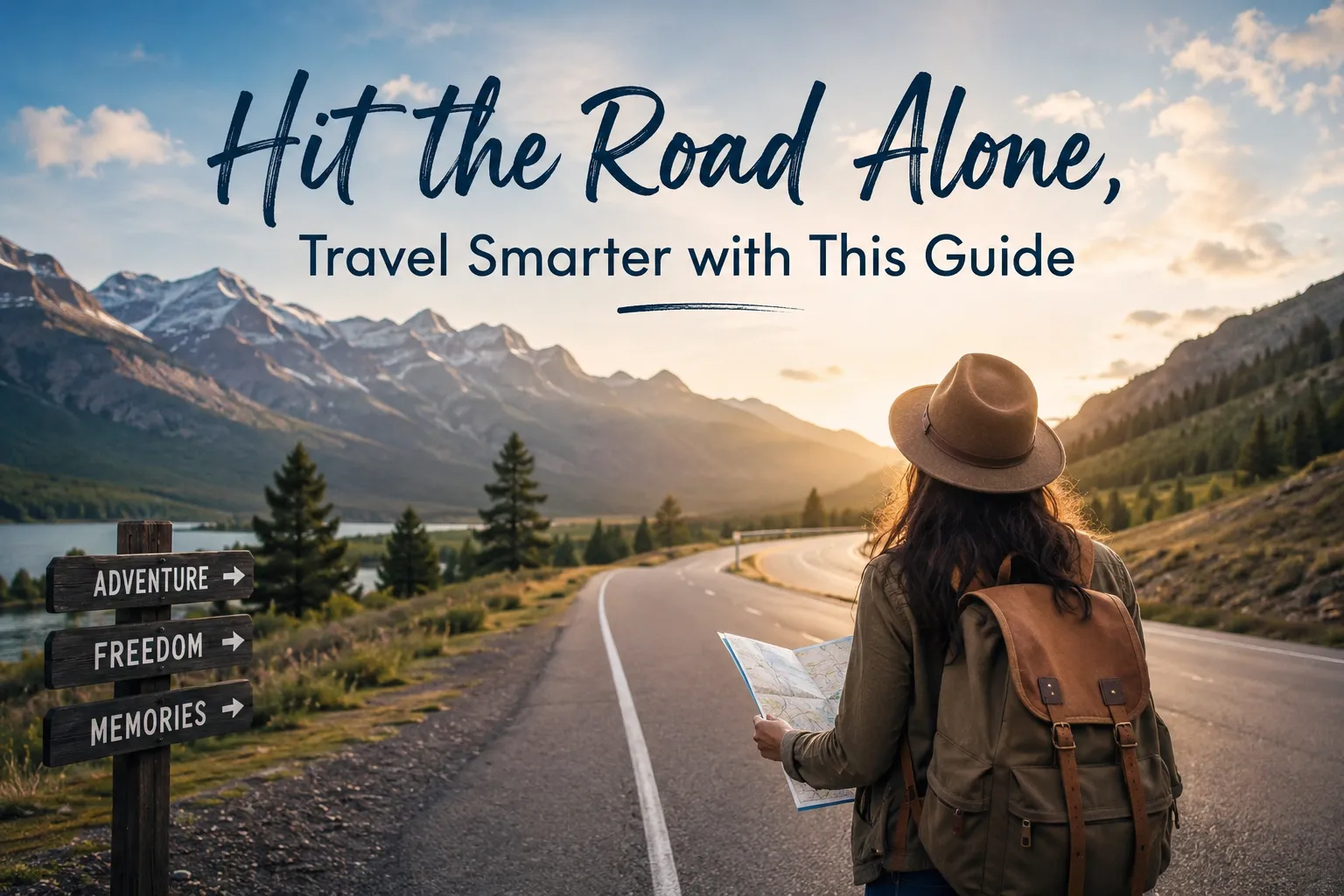
Hit the Road Alone, Travel Smarter with This Guide
A solo travel road trip is uniquely liberating, which no other form of travel replicates. The only thing a traveler is chasing is experience, without constraints of flights or schedules. The form of freedom comes from being on your own, and traveling opens a different form of meta-cognition within a person. It is just you, vehicle, an open road, and the freedom to stop whenever something catches your eye. They are the purest form of independent travel, and the experience is amongst the most memorable among travelers.
But on the other hand, you have to equip yourself to experience complete freedom as well. It requires a different kind of preparation than flying somewhere or navigating on foot. It includes variables of safety, logistics, and mechanical, especially for a beginner traveler. If you plan it right, then it provides you with freedom and thrill at its finest.
This guide makes it safe, inexpensive, and unforgettable for you to drive alone.
Understanding why Solo Road Trips are Different:
It is important to comprehend the differences between solo and group road journeys before delving into the specifics of each. When you drive alone, you are the only one who can make decisions.
Travelling alone on roads makes you the sole decision maker. Route changes, stop decisions, and meal timing fall on you. Though such decision-making makes a solo road trip intoxicating, it means every problem falls on your shoulders. Facing an accident, a flat tire, a wrong turn, a mechanical issue, or severe exhaustion, such a variable makes traveling a bit difficult. Furthermore, budgeting also becomes another contention. You cannot cut fuel costs or split them, toll fees, or meal costs; every road cost falls entirely on you.
The best option the traveler has is to equip themselves to face such problems.
Choosing Route Wisely:
The trips are determined by the route, particularly if you are traveling alone. More consideration and thought should be given to it than just drawing a line from one point to another. Determine your overarching objective first.
Start by deciding what your overall goal is. Is the destination or is the journey itself? Both of them are equally important, but they produce very different routes and very different experiences. Once your goal is decided, research the general direction and the road quality between your planned points. Then decide on your vehicle according to it. Some roads require a four-wheel vehicle, while others can be travelled by motorbike.
After it, build your route around a realistic daily driving distance. The most common mistake among first-time road trippers is that they dramatically overestimate how much they can comfortably drive. As a general rule, four to five hours of driving is enough for a day. Long drive days are occasionally necessary but should be exceptions rather than the norm.
Finally, instead of determining the itinerary, decide on your overnight stops beforehand. Because it’s risky to look for stops when you’re weary.
Prepare your Vehicle:
The non-negotiable checklist for preparing your vehicle. Whether you’re driving your vehicle or it is a rental, thorough vehicle preparation is the single most important step in solo road trip planning.
Verify the following prior to the road trip:
If traveling in a four-wheel drive vehicle, the tire condition and pressure can also support an additional spare tire. oil for engines. levels of brake fluid, coolant, and windscreen washer fluid. state of the battery. Particularly crucial for older cars or in extremely hot conditions. lights, indicators, brake lights, headlights, and hazard lights. Before leaving, the brakes should be professionally inspected if there are any strange noises or sensations when braking.
Carry a basic roadside emergency kit all the time. As many countries legally require some of the toolkit items to be present in the case of emergency.
A reflective warning triangle, a high-visibility vest, jumper cables, a basic toolbox, a torch with extra batteries, and a first aid kit should all be included in the tool kit.
Making a Budget for a Road Trip Alone:
Four categories make up a single travel budget: car expenses, petrol, lodging, and meals. You can get a fair total by evaluating your expenses for each category before you depart.
Vehicle Cost- if you are renting, assess the cost through multiple providers to compare the total cost. If driving your own factor in the car inspection.
Fuel- this will be your highest cost. Calculate your approximate distance, research your vehicle’s fuel consumption, and check current fuel prices at your destination to get a realistic fuel budget.
Accommodation- a road trip travelling provides you with a wide range of options. It provides with roadside motels and budget hotels to camp, hostels in towns along your route and lastly wild camping, sleeping in your own vehicle in popular locations.
Food-follow the same rule as solo travel. Eat locally and avoid tourist-facing establishments. It keeps the cost low and quality high. Road trips have the added advantage of roadside food stalls and local stalls, providing both cheap and excellent food. Here is a complete guide from a solo traveler for a road trip.
Travel with Safety:
When on a road journey alone, your safety comes first. Since it has the greatest potential to affect your safety, managing your fatigue is extremely important. Before you go, set a challenge for yourself. Avoid driving for longer than two hours at a time. If you are truly exhausted, you should never drive. You can save your life by taking a thirty-minute break. Share your location and route with a reliable contact at home and let them know if your plans alter. Additionally, make sure someone is aware of your whereabouts by checking in at each overnight stop.
Keep your phone charged at all times. It is your navigation, your emergency communication, and your roadside assistance contact.
When packing your trip bag, a car charger is not an option. Steer clear of nighttime travel, especially in new places. Potholes, animals on roads, and unclear intersections are examples of hazards that can be avoided during the day but become extremely dangerous at night.
Finally, always follow your gut when it comes to stopping places. Steer clear of rest locations if they seem too remote, uncomfortable, or strange. Your car travels will always be more enjoyable if you plan ahead. It provides you with freedom, spontaneity, and thrilling, worry-free vistas.