The Work and Wander Guide: How to Earn While You Travel
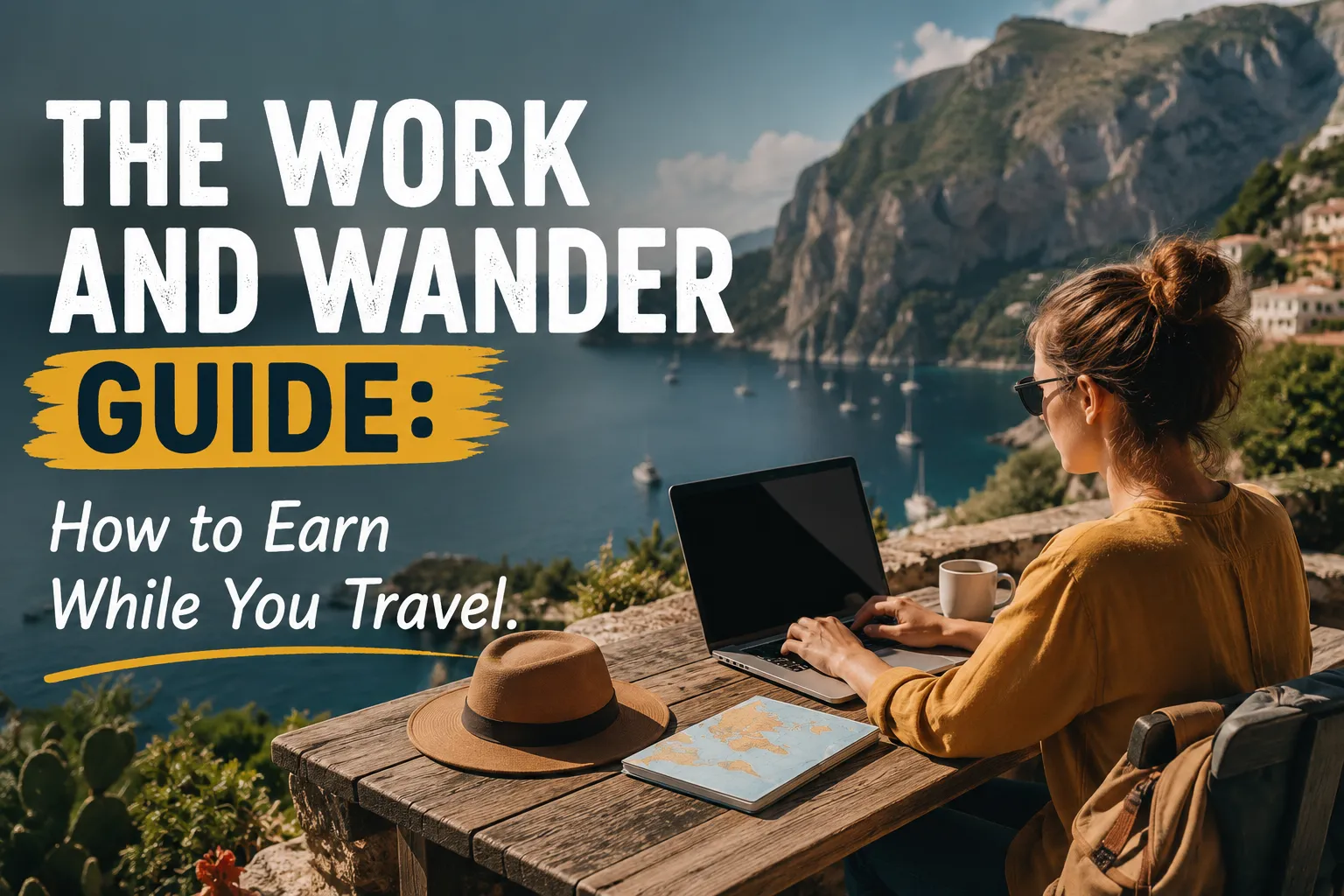
When we browse social media, we frequently come across pictures with a laptop open on a table by the beach with well-framed titles like “Office Views” or “Working and Traveling.” The term “digital nomad lifestyle” is increasingly often used to describe this. Such a life may look like a dream, but it is not the same in reality.
The real digital nomad lifestyle does not look Instagram-perfect. Rather, it usually looks like working with bad Wi-Fi, taking client calls in cramped hostels, and looking for manageable spaces and cafes to work.
But at the same time, it has its own perks too. After closing the laptop, you walk into the city you never explored, having the entire afternoon to yourself to fill it with activities. It looks like life where work and travel are not opposites but are the same thing.
Such a life is achievable and rewarding as well, but it requires preparation, realistic expectations, and a clear plan.
What Digital Nomad Life Looks Like:
Before diving into how life works, it is better to understand what this life really is.
There are two realities that exist with digital nomad life. The romantic version provides you with working for a few hours a day in some paradise and spending the rest of your day exploring. But such life is not a starting point. When you are trying to build remote income for the first time and establishing yourself as a freelancer, the work hours are usually longer than they were in a traditional office.
There is another reality that exists: constant travel while working is exhausting. It takes a lot of energy to travel and yet produces professionally. The majority of seasoned digital nomads develop a habit of traveling slowly. Rather than moving about all the time, they stay in each place for a few weeks or months.
How to Earn Money on the Road:
Finding remote work has no single path. The best approach to find it depends on your existing skills, your financial needs, your timeline, and most importantly, your tolerance for income uncertainty. The realistic options are mentioned below:
Freelancing, the most adopted work pattern among Generation Z, is the finest way to earn while travelling. If you have marketable skills, for instance, graphic design, content writing, translating, accounting, or any other service that can be exchanged and offered to a client anywhere in the world. In contrast to traditional work, freelance income is initially unpredictable but increases with expertise and reputation.
Remote work is the second technique to get money while traveling. It is regular work that is done totally online and comes with a wage, benefits, and structured employment. Since 2020, this type of work has grown dramatically, particularly in the wake of COVID-19. Nowadays, a lot of businesses employ people who work remotely across time zones. During job hunting, many platforms specialize in remote work positions, and they cover almost every professional field. Remote employment provides you with the freedom of location to travel and see the beauty of the world.
You may earn a steady income for travel and enjoy the luxury of being a digital nomad by running an online business where you can offer goods, services, and courses. However, it takes time and perseverance to develop, with the right investment to generate sufficient funds and travel freedom.
Last but not least, seasonal and working travel options are available for lone travelers who would rather work in person while relocating. Working in seasonal agriculture, teaching English overseas, working at a hostel in exchange for lodging, or working on cruise ships or yachts are all viable sources of income that don’t require you to stay in one place.
Best Platforms to Find Remote Work:
There are many platforms available online to find work, but it depends on your approach. For freelancers, Upwork and Fiverr are the largest global marketplaces connecting freelancers with clients across every skill category. Both these platforms have severe competition at the entry level, but with time and building a reputation, you can avail higher-paying opportunities. Another platform known as Toptal operates at a premium level. Its acceptance is selective, but the rewards are higher.
For remote work, Remote.co, We Work Remotely, and FlexJobs list verified remote positions across different industries. LinkedIn’s remote filter has become increasingly useful as remote listings have grown.
For English teaching positions, VIPKid and iTalki connect English speakers with students globally for online lessons. Classes can be held online with reliable internet.
Best Destinations for Digital Nomads:
Not every destination is built for you to become a digital nomad. The best digital nomad locations share traits like reliability, fast internet, affordable cost of living, visa extensions and serene travelling.
Chiang Mai, Thailand has been, over the years, considered the unofficial capital of digital nomad culture. It offers affordable accommodation with excellent coworking spaces, amazing and cheap food and a massive already established nomad community.
Lisbon, Portugal sits somewhat at the premium end of nomad community destinations. It is on the expensive side compared to the locations in Asia. But it has stability, infrastructure and quality of life of Western Europe. Portugal’s Digital Nomad Visa offers remote workers a long-term legal framework to live and work.
The world’s most visually striking hotspot for digital nomads is still Bali, Indonesia, particularly the Canggu region. Despite its popularity, the coworking infrastructure is first-rate, the community is vast, and the cost of living is affordable.
Not everyone is suited for the life of a digital nomad. Building a steady income is not enough to support a lifestyle; you also need to have a genuine comfort level with the logistical challenges of working across time zones and borders, as well as a tolerance for uncertainty.